ISO 12312-2 and eclipse viewers: what the standard means before August 2027
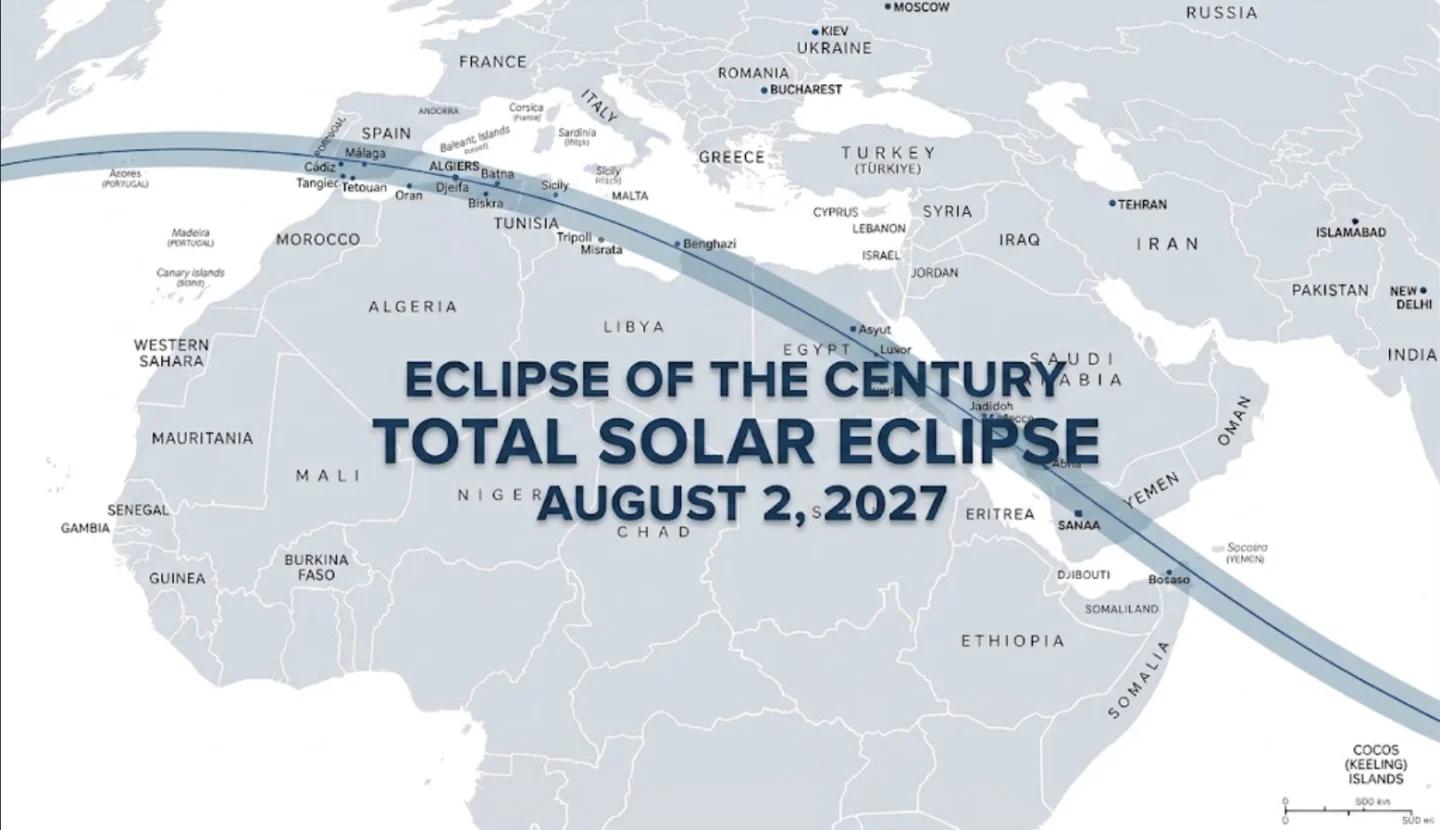
On 2 August 2027, the Moon’s shadow will cross southern Spain, Gibraltar, North Africa and parts of the Middle East. Near Luxor, Egypt, totality will last roughly 6 minutes 23 seconds—an extraordinary interval when the Sun’s bright face will be completely hidden. But the partial phases surrounding those minutes last much longer, and most people outside the narrow path will see only a partial eclipse.
That makes eye protection part of the plan, not a last-minute accessory. ISO 12312-2 is the international standard relevant to eclipse glasses and handheld viewers intended for direct, unmagnified observation of the Sun. The number matters, but printing it on cardboard is not proof that a product actually conforms.
This iso 12312-2 solar eclipse glasses 2027 guide explains what the standard covers, what credible evidence looks like and how to use a viewer correctly. You can also explore your location with our Eclipse Explorer and 3D map and review the viewer information on our solar eclipse glasses shop well before demand peaks.
The short version: what ISO 12312-2 means
ISO 12312-2:2015 is formally titled “Eye and face protection — Sunglasses and related eyewear — Part 2: Filters for direct observation of the Sun.” According to the American Astronomical Society, it was adopted in 2015 and affirmed in 2020. Readers should check the latest AAS and ISO information for any subsequent revision or amendment before the 2027 eclipse.
The standard applies to nonmagnifying, nonfocusing viewers used directly in front of the eyes. That includes familiar cardboard eclipse glasses and handheld solar viewers. It establishes requirements involving:
- transmission of visible, ultraviolet and infrared radiation;
- consistency of transmission across the filter;
- filter material and surface quality;
- secure and suitable mounting;
- labeling and instructions for use.
In plain English, a conforming viewer must reduce the Sun’s radiation to appropriate levels, provide a usable view and remain physically sound during normal handling. It is not enough for the filter to make the Sun look dim. Invisible ultraviolet and infrared radiation cannot be assessed by looking through the material at a lamp or by judging its color.
The phrase iso 12312 2 standard solar eclipse glasses is common in product descriptions, but the accurate concept is a viewer shown to conform to ISO 12312-2. The standard is a technical specification—not a brand endorsement, a government shopping list or a guarantee that every item carrying the number is genuine.

“ISO approved” and “NASA approved” are not precise claims
ISO develops and publishes standards; it does not personally approve each packet of eclipse glasses. NASA likewise states that it does not approve particular brands of solar viewers. That is why expressions such as approved solar eclipse glasses, eclipse glasses nasa approved and nasa certified solar eclipse glasses should prompt a closer look at the evidence rather than instant confidence.
“Certified” also needs context. A manufacturer may have a product tested for conformity by a properly accredited laboratory, but that is not the same as ISO endorsing or registering the product. More careful language identifies the exact standard, the product tested and the basis for the conformity claim.
The AAS says its evidence threshold for listing manufacturers includes a quantitative laboratory report. For laboratories operating under the relevant accreditation route, the lab should be accredited to ISO/IEC 17025 and have ISO 12312-2 testing within its scope; the AAS also describes an applicable EU notified-body route. The report should contain measurements rather than a vague one-word “pass.”
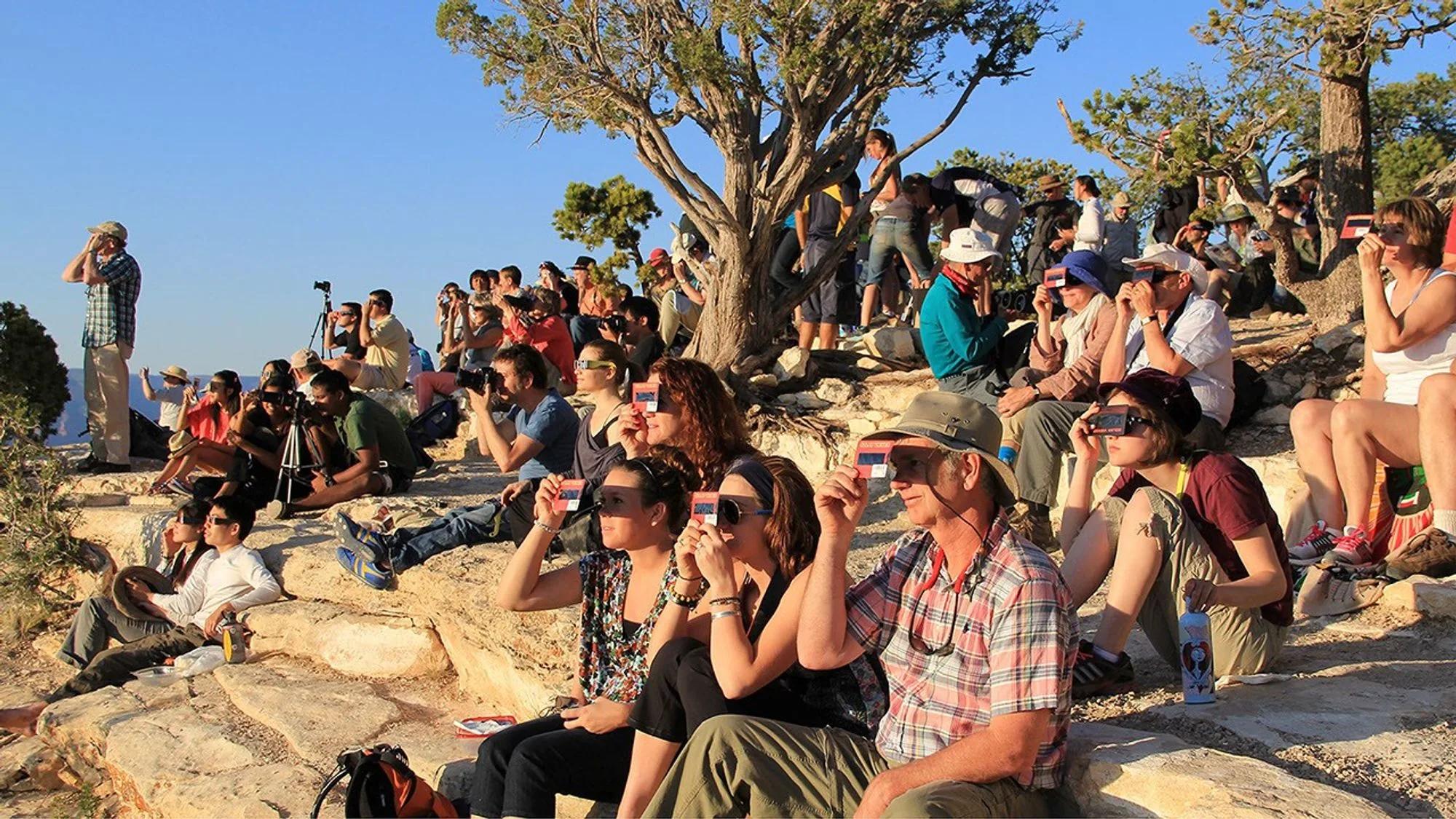
This distinction matters when a trust badge appears only as an image. A logo, certificate-shaped graphic or printed ISO number can be copied. Useful evidence is traceable: it identifies the manufacturer, the tested product, the laboratory and the applicable standard. Our companion guide on fake and low-quality eclipse glasses goes further into supply-chain warning signs.
What the laboratory is actually checking
The Sun delivers energy across wavelengths that include visible light, ultraviolet and infrared. A proper solar viewer controls the radiation reaching the eye across the relevant spectrum. ISO 12312-2 therefore goes beyond the question, “Does this look dark?”
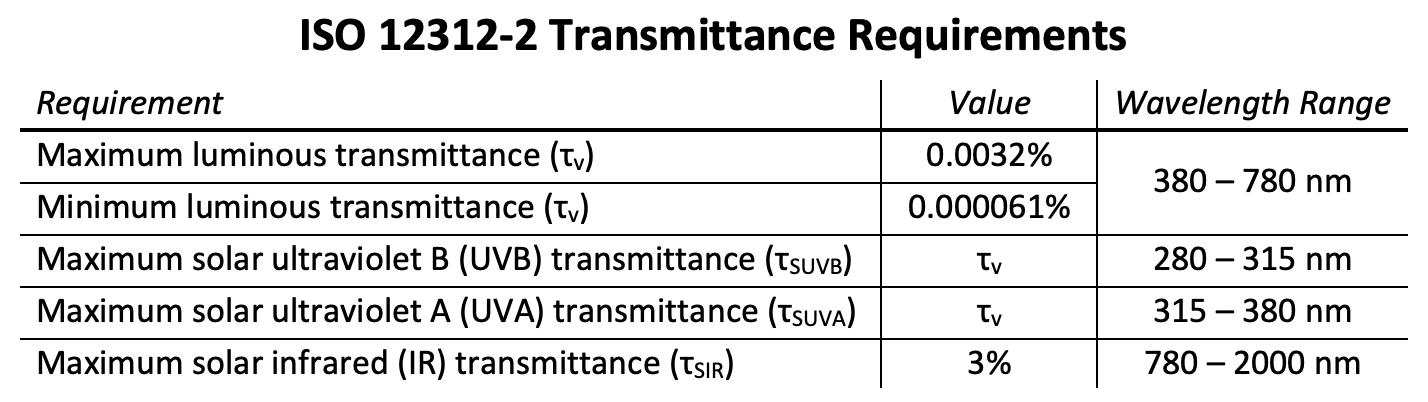
The standard includes limits for luminous and spectral transmittance—the fraction of incoming radiation that passes through the filter. The AAS notes that a visible-light transmittance of 0.001% means only about one part in 100,000 passes through. That is an illustration of the scale involved, not a home-testing target: consumers cannot validate spectral performance by eye.
Uniformity matters too. A filter should not contain regions that transmit dramatically different amounts of light. Material quality requirements address defects such as scratches, bubbles, pits and pinholes, while mounting requirements help ensure the filter cannot easily come loose during normal use.
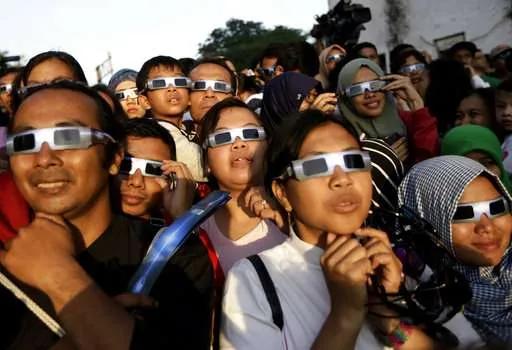
A safe view should show the Sun as a comfortably bright, sharply bounded disk against a dark background. Its apparent color may be white, bluish white, yellow or orange depending on the filter technology. Color alone says nothing reliable about conformity.
The AAS has also discussed technically supported changes and exceptions to parts of the 2015 text, including proposed transmission and uniformity provisions. That is a reminder that standards work continues as researchers test more products and gather evidence. It is not permission for a seller to ignore the standard or invent its own “grade.”
ISO 12312-2 is not the standard for ordinary sunglasses
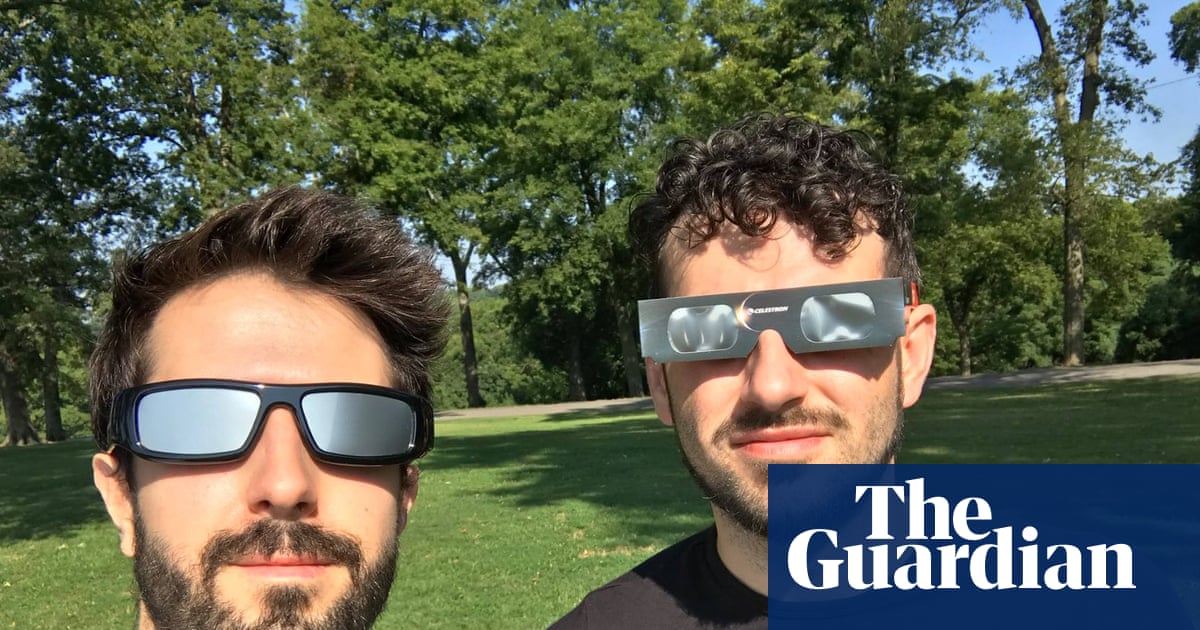
Ordinary sunglasses are designed for everyday protection and visual comfort, not direct observation of the Sun. Even extremely dark sunglasses transmit far more light than a purpose-made solar viewer. Stacking several pairs does not transform them into an eclipse filter.
ISO 12312-1 concerns sunglasses for general use. ISO 12312-2 concerns filters for direct observation of the Sun. A listing using the muddled phrase iso 12312 1 solar eclipse glasses may be confusing those different scopes, so do not treat it as equivalent wording.
Similar punctuation variations—such as iso 12312.2 eclipse glasses or iso 12312-2 glasses—may refer to the intended standard, but typography is not evidence. The correct reference should be accompanied by a trustworthy manufacturer identity, instructions, traceability and credible conformity documentation.
Nor should you make direct-viewing glasses from smoked glass, exposed film, food packaging, CDs or improvised dark plastic. You can make a safe pinhole projector because it lets you observe a projected image with your back to the Sun. You should not make a filter to place over your eyes unless you are working from appropriate materials, validated specifications and expert instructions—and for most families, buying a purpose-made viewer from a traceable source is the sensible choice.
A label is a starting point, not the whole investigation
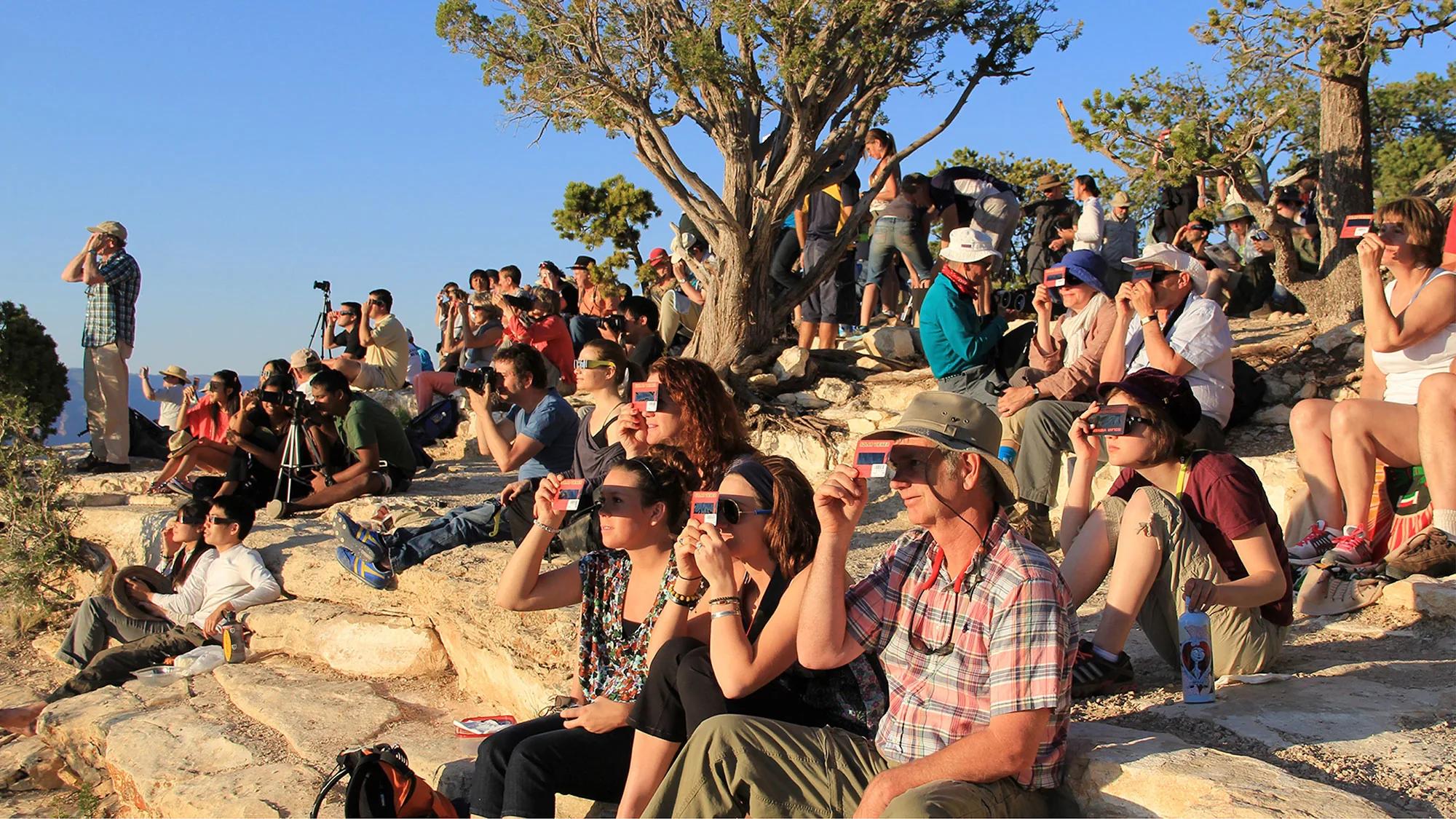
A properly labeled viewer should identify the responsible manufacturer or supplier and provide instructions in the language of the market where it is sold. Look for a clear reference to ISO 12312-2, but do not stop there.
Before buying, ask four questions:
- Who made or supplied the finished viewer? A name without a traceable business or contact route is weak evidence.
- What product was tested? Documentation for one filter material or model should not automatically be assumed to cover every item a seller offers.
- Was the testing performed by an appropriately accredited laboratory? A certificate image without a verifiable laboratory and scope deserves scrutiny.
- Is the seller part of a traceable supply chain? A known manufacturer’s name can be copied onto an unrelated product, so the route from manufacturer to seller matters.
The AAS supplier list represents manufacturers that provided evidence satisfactory to its Solar Eclipse Task Force; it is not an ISO or NASA approval program. The AAS also warns against buying whichever product happens to appear first in an advertisement or marketplace result. Traceability is more important than prominence.
Retail wording can be chaotic. A page described as an iso 12312 2 solar eclipse glasses 2027 guide pdf may be educational material rather than a laboratory report, while an iso 12312 2 solar eclipse glasses 2027 guide price page tells you nothing about filter performance. Treat supporting documents according to what they actually are.
The same principle applies to phrases such as iso 12312 2 grade solar eclipse glasses and iso 12312 2 solar eclipse viewing glasses. ISO 12312-2 is not a casual “grade” that a seller awards itself. A product claim needs evidence tied to the viewer being offered.

Buying for 2027: price, location and availability
Price is not a safety test. A suspiciously cheap anonymous listing is a reason to investigate, but an expensive viewer can also carry unsupported claims. What you are paying for should include a suitable filter, sound construction, clear instructions and a supply chain you can trace.
Phrases such as buy iso 12312 2 solar eclipse glasses, iso 12312-2 solar eclipse glasses nearby and iso 12312-2 solar eclipse glasses boots express a desire for immediate retail availability. The name of a nearby shop, however, does not establish conformity. Ask who manufactured the viewer and whether the retailer is an authorized seller rather than assuming that a familiar storefront has completed the technical checks for you.
The same applies to iso 12312-2 solar eclipse glasses uk. UK buyers should review the product’s stated conformity information, responsible supplier and applicable market requirements. European shoppers can read our separate explanation of CE marking and ISO 12312-2, because a CE mark and an ISO conformity claim answer related but distinct questions.
Plan for your whole group early. A family can share viewers because the partial phases develop slowly, but each child needs close supervision, and nobody should be pressured to rush a handover while looking upward. Schools, clubs and event organizers should allow time to receive the order, verify its source, read the instructions and inspect every viewer.
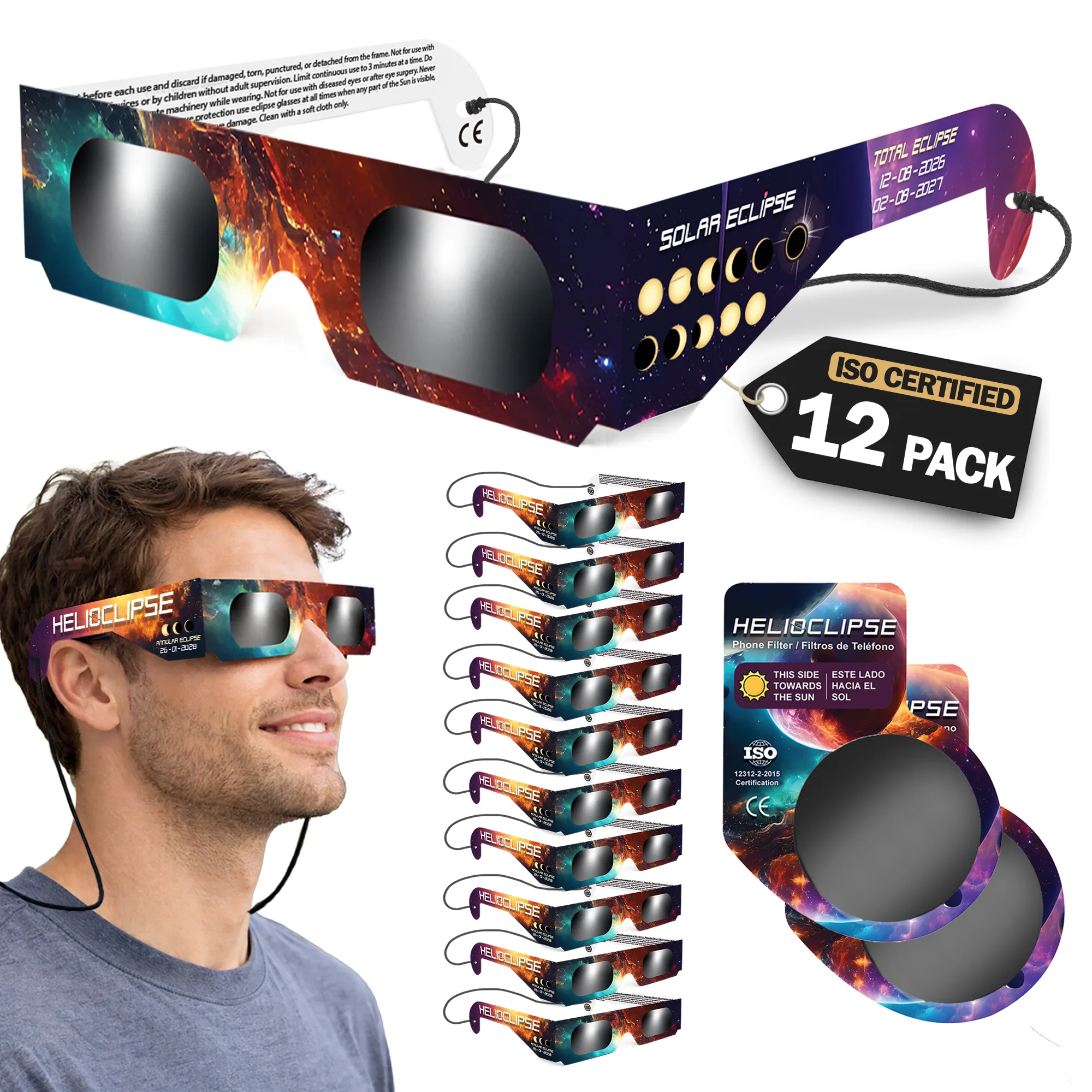
When you evaluate solar eclipse glasses iso 12312-2 certified or eclipse glasses iso 12312-2 product wording, look past the headline and read the supporting details. Our Helioclipse eclipse-glasses shop gives you a direct place to review the products and available conformity information without relying on an unknown marketplace listing.
How to inspect a viewer before eclipse day
No home procedure can prove that a filter adequately controls invisible ultraviolet and infrared radiation. That requires appropriate laboratory measurements. A simple check can still reveal obvious failures, damage or a filter that is plainly too light.
Start with the supply chain and instructions. Then inspect the viewer under good room lighting. Discard it if the filter is scratched, punctured, torn, creased in a way that damages the viewing area, or separating from its frame. Check both sides and hold it so ordinary room light reveals the surface without directing your eyes toward the Sun.
The AAS suggests putting the viewer on indoors. You should see essentially nothing through it, apart from perhaps an exceptionally bright lamp appearing very faint. Outdoors, normal scenery should remain invisible. These checks can identify a clearly inadequate viewer, but passing them does not establish conformity.
If you have a traceable viewer in excellent condition and its instructions permit use, cover your eyes before turning toward the Sun. The solar disk should appear comfortably bright and sharply defined. Turn away before removing the viewer. If the view is painfully bright, hazy, or accompanied by unexpected light leaks, stop using it.
Do not conduct destructive tests, scratch the film deliberately or rely on a phone camera to measure darkness. A camera’s automatic exposure can make different filters appear deceptively similar.
Do eclipse glasses expire?
Age alone is not the only issue. The AAS says viewers less than 10 years old may be reused when their manufacturer has had them tested by a properly accredited laboratory, the products were found to conform to ISO 12312-2, and the filters remain undamaged and securely mounted. Always follow the manufacturer’s current instructions for the specific viewer in your hands.
Some older viewers carry warnings to discard them after three years or to limit each look to three minutes. The AAS describes those blanket warnings as outdated for recently manufactured, conforming viewers in excellent condition. That does not mean every old viewer is automatically safe.
Storage determines whether a good viewer stays good. Keep it dry, clean and protected from abrasion, crushing and punctures. An envelope or original package stored at room temperature is better than a loose glove compartment, beach bag or kitchen drawer. Do not use water, glass cleaner or wet wipes on cardboard viewers; moisture can deform the frame or loosen the filter.
Before 2 August 2027, inspect every saved pair again. If you cannot trace its origin, confirm its instructions or trust its condition, replace it or use an indirect projection method.
Glasses are for eyes—not binoculars, telescopes or camera lenses
ISO 12312-2’s direct-viewing scope is easy to misunderstand. Eclipse glasses and handheld viewers are intended for unmagnified observation with your eyes. They are not substitutes for filters designed to cover the front aperture of binoculars, telescopes or camera lenses.
Never look through an unfiltered optical instrument while wearing eclipse glasses. Binoculars and telescopes concentrate sunlight; the energy can damage the viewer and your eye. A suitable optical solar filter must be secured over the front of the instrument, before sunlight enters the optics, and its selection and use require specialist guidance.
Do not hold one lens of eclipse glasses over a camera or telescope eyepiece. Do not use a small filter at the back of a telescope. If photography is part of your plan, separate the eye-safety plan from the equipment plan and consult an experienced solar observer or specialist astronomy supplier.
The totality exception—and why your exact location matters
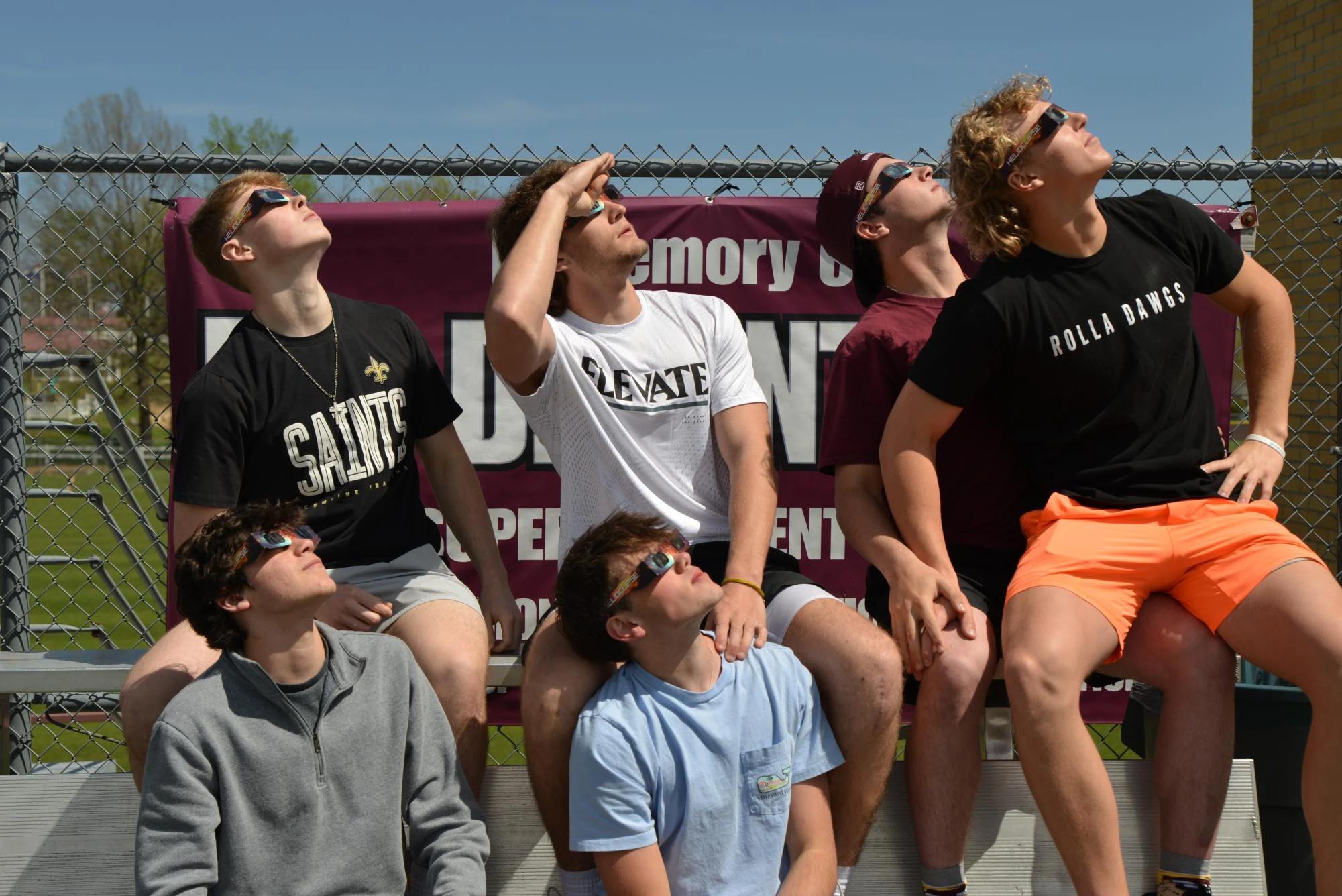
During a total solar eclipse, certified viewers remain on throughout the partial phases. Only observers inside the path of totality may look directly without a solar viewer, and only while the Moon completely covers the Sun’s bright face.
For the 2 August 2027 eclipse, that distinction will separate two entirely different experiences. Near Luxor, totality is expected to last about 6 minutes 23 seconds near the center of the path. A location outside the path—even one a short drive away—will have no safe glasses-off interval at all. A 99% partial eclipse is still a partial eclipse.
At the start of totality, the last brilliant point of the photosphere disappears and the view through eclipse glasses goes dark. Only then may unaided observers remove them. As soon as any bright part of the Sun returns, put the viewers back on immediately. This exception does not automatically determine safe camera or telescope procedure.
Use our 2027 eclipse planning guide and guide to eclipse phases and viewer use alongside the interactive map. Confirm whether your exact observing site is inside the path and check the local circumstances rather than relying on the name of a nearby city.
A practical checklist for families, schools and groups
Several weeks before the eclipse:
- Confirm whether your observing site will experience totality or only a partial eclipse.
- Choose viewers from a traceable source and review the conformity information.
- Order early enough to inspect the shipment and resolve questions.
- Keep the instructions and packaging with the viewers.
- Plan a pinhole-projection activity as a safe, shareable second way to follow the partial phases.
On eclipse morning:
- Inspect every filter and frame in good light.
- Discard damaged, wet or separating viewers.
- Explain the glasses-on rule before anyone becomes distracted by the sky.
- Show children how to cover their eyes before looking up and turn away before removing the viewer.
- Keep binoculars and telescopes out of casual use unless they have proper front-mounted solar filters and an experienced operator.
For groups inside the path of totality, designate a confident adult to call the transitions. Everyone should understand that totality is brief, local and unmistakably different from a deep partial phase. Outside the path, the rule never changes: viewers stay on whenever anyone looks directly at the Sun.
Safe Solar Eclipse Glasses? Three Ways To Spot A Dangerous
Astronomy Garage with Reflactor
Frequently asked questions
Are ordinary sunglasses safe for watching a solar eclipse?
No. The relevant standard is for nonmagnifying, nonfocusing viewers designed for direct observation of the Sun, not ordinary sunglasses. A safe viewer must control visible, ultraviolet, and infrared radiation; darkness alone does not demonstrate that protection.
Is it safe to make an eclipse viewer at home?
The excerpt does not provide instructions or evidence that homemade viewers meet the required protections. Use a viewer shown to conform to ISO 12312-2, with appropriate filter performance, mounting, labeling, and instructions.
Can I check eclipse glasses myself by looking through them at a lamp?
No. Looking at a lamp or judging the filter’s color cannot assess invisible ultraviolet and infrared radiation. The meaningful evidence is that the viewer is shown to conform to ISO 12312-2, rather than simply displaying the standard number on its frame or packaging.
Do eclipse viewers have an expiration date?
The excerpt does not state that eclipse viewers expire or provide a replacement interval. Before use, consult the viewer’s instructions and labeling, and check current information from relevant standards and astronomy sources before the 2027 eclipse.
What does ISO 12312-2 tell me when choosing a solar viewer for the 2027 eclipse?
ISO 12312-2 is the international standard relevant to eclipse glasses and handheld viewers for direct, unmagnified solar observation. It addresses radiation transmission, filter consistency and quality, secure mounting, and labeling, but a printed ISO number alone is not proof that a viewer conforms.
On-site next steps
- Shop Helioclipse solar eclipse glasses and review the product details, instructions and available conformity information.
- Check your exact observing location with the Helioclipse Eclipse Explorer, especially if you are near the edge of the 2027 path.
- Share the safety plan with your family, school or viewing group now—not while everyone is looking up on 2 August 2027.
- Visit our eclipse blog and guides for more help with phases, travel planning and safe observation.
Sources & further reading
- American Astronomical Society: About the ISO 12312-2 Standard for Solar Viewers
- American Astronomical Society: How Can You Tell If Your Eclipse Glasses or Handheld Solar Viewers Are Safe?
- American Astronomical Society: How to Get Onto Our List of Manufacturers of Safe Solar Viewers & Filters
- NASA Science: Eclipse Viewing Safety
- Sky & Telescope: Partial: The Solar Eclipse for the Rest of Us
- American Astronomical Society: How to View a Solar Eclipse Safely
- American Astronomical Society: Eyewear & Handheld Viewers
- American Astronomical Society: Suppliers of Safe Solar Viewers & Filters
- NASA Science: What to Expect: A Solar Eclipse Guide
- American Astronomical Society: Solar Eclipse Eye Safety technical report