After totality ends: the sky’s rhythm most first-timers overlook
Totality ends with an explosion of light. A brilliant point breaks through a valley on the Moon, the corona begins to disappear, and daylight returns with startling speed. People cheer, hug, check their photographs—and often start packing.
But the eclipse is not over.
The central safety rule is immediate: before any part of the Sun’s bright surface reappears, put your eclipse glasses back on. Then keep watching. The Moon still covers much of the Sun, unusual shadows can return, the air begins warming, and the solar crescent slowly grows for roughly another hour in many eclipses. Exact circumstances depend on your location, so check the final-partial-phase and fourth-contact times for your observing site in our Eclipse Explorer.
That overlooked hour is quieter than totality, but it completes the story. It is also one of the best opportunities to notice that an eclipse is not a single dramatic instant. It is a sequence with a beginning, a peak and a long release.
Third contact: the instant totality is over
Astronomers divide a total solar eclipse into four principal contacts. First contact begins the opening partial phase. Second contact marks the start of totality. Third contact is the end of totality, when the Moon’s motion uncovers the first point of the Sun’s brilliant photosphere. Fourth contact comes later, when the Moon has moved completely clear of the solar disk.
The transition at third contact is abrupt. Red prominences or a thin arc of the chromosphere may appear near the retreating edge of the Moon. Then one concentrated point of direct sunlight emerges, producing a second diamond-ring effect. Baily’s Beads can follow as sunlight passes through valleys along the Moon’s rugged profile.
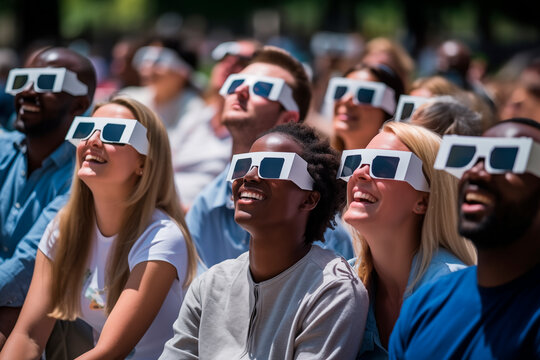
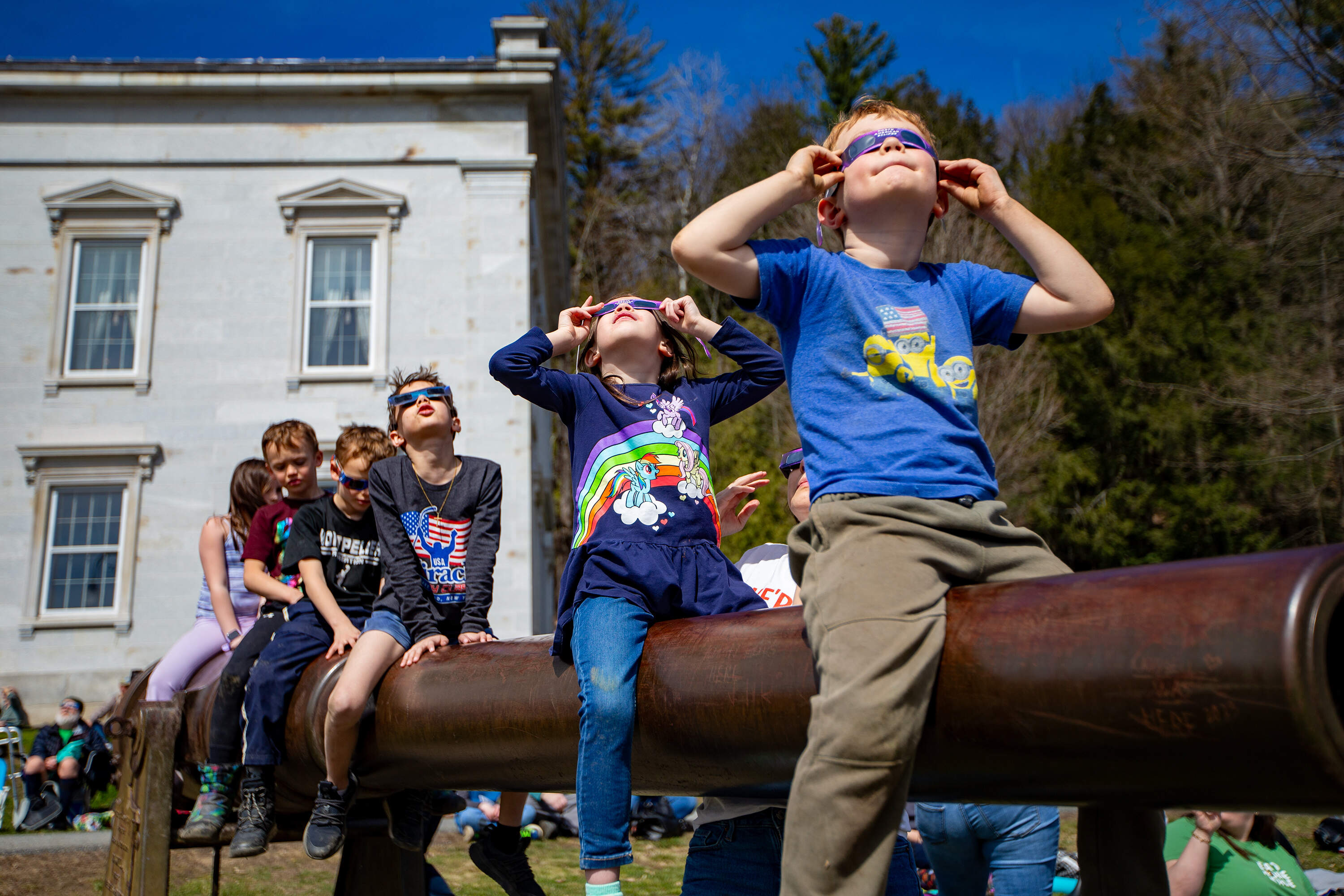
That first returning light is your signal—not a few seconds later, and not after taking one more unfiltered photograph. Solar viewers go back over your eyes, while properly fitted solar filters must already be secured over the front of cameras, binoculars and telescopes. Our detailed guide to when eclipse glasses go on and come off can help your group rehearse the sequence before eclipse day.
A useful spoken countdown is simple: “Glasses on before the Sun returns.” Ask one responsible adult or experienced observer to call it out for the group. During a short totality, excitement can easily overwhelm even a plan everyone understood five minutes earlier.
After totality, what happens to the eclipse?
The plain-language question—after totality what happens eclipse observers need to know—is answered by orbital motion: the Moon continues eastward across the Sun from our viewpoint. Totality has ended because the Moon no longer covers the entire photosphere, but it still covers part of it. You are now watching the second partial phase.
At first, the exposed solar crescent is extremely thin. It then becomes broader as the Moon uncovers more of the Sun. NASA’s educational material notes that the post-totality partial phase lasted about 60 to 80 minutes in its 2024 examples. The duration for another eclipse and a particular site will differ, so do not treat that range as a local timetable.
The sequence is roughly the opening partial phase in reverse:
- Direct sunlight reappears at third contact; eye protection is already back on.
- Baily’s Beads and the diamond-ring geometry pass quickly.
- Faint shadow bands may return on pale, flat surfaces.
- The solar crescent widens while the sky brightens and temperatures begin to recover.
- At fourth contact, the Moon’s trailing edge leaves the Sun and the solar eclipse ends.
This is the central idea in our after totality what happens eclipse 2026 guide: totality may last seconds or a couple of minutes, while the eclipse surrounding it unfolds over hours. Leaving at third contact means walking out after the climax but before the final act.
Put the glasses back on before the flash
Only people inside the path of totality, during the brief interval when the Moon completely covers the Sun’s bright face, may look at the totally eclipsed Sun without a solar viewer. As soon as any bright photosphere begins to return, direct viewing becomes unsafe again.
Outside the path, there is no glasses-off interval. The same is true throughout a partial solar eclipse and an annular solar eclipse: some part of the bright photosphere remains visible at all times. A hybrid eclipse can be total along one part of its narrow track and annular along another, so the safe procedure must follow what is physically happening at your exact location—not what another city is experiencing.
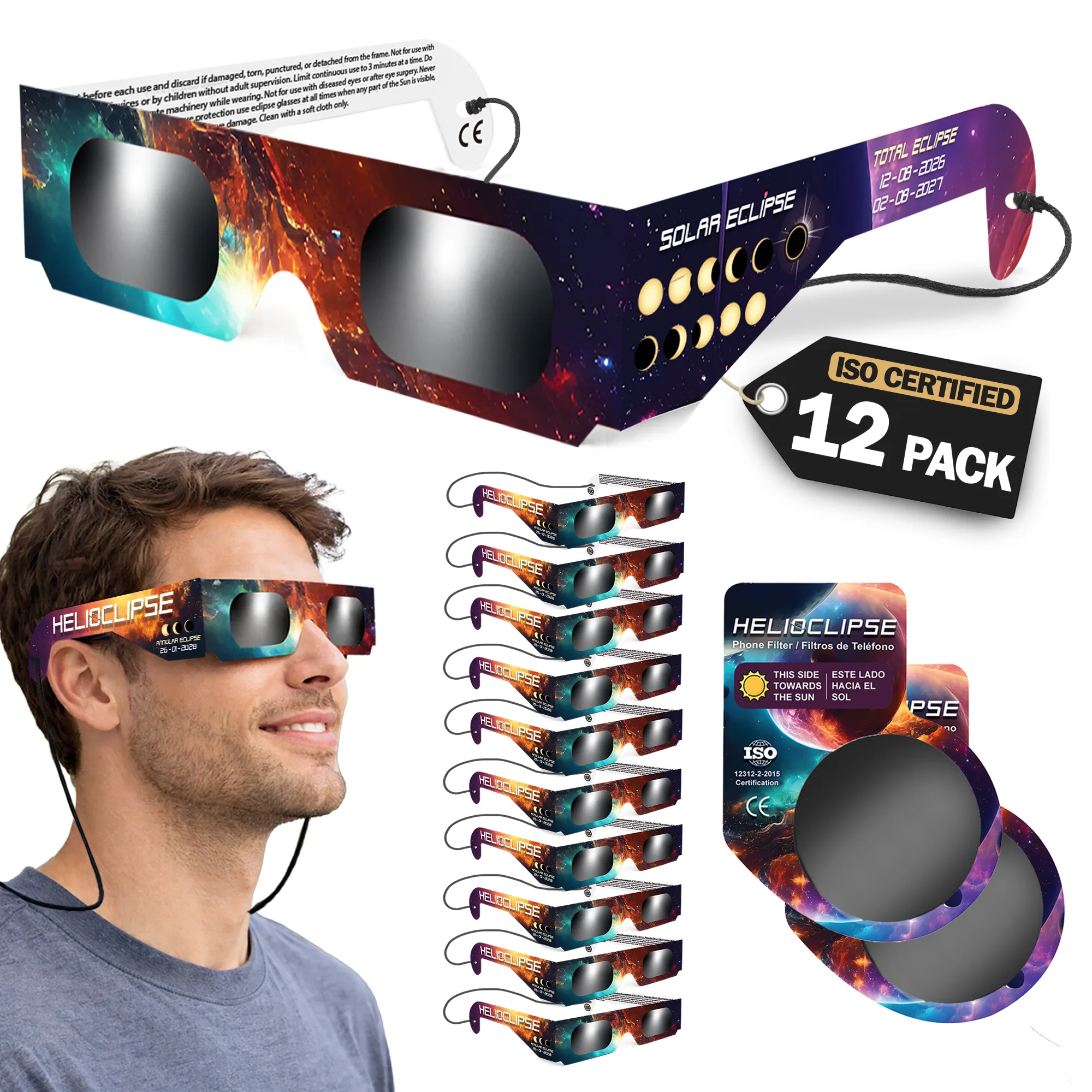
Use special-purpose solar viewers that conform to ISO 12312-2, inspect them for tears, punctures, loose filters or deep scratches, and supervise children. Ordinary sunglasses are not a substitute. If you are preparing a family or school kit, our solar eclipse glasses page is the practical place to arrange certified solar eclipse glasses and eclipse viewing glasses before demand peaks.
Be careful with marketplace language. NASA does not approve or certify viewer brands, so wording such as eclipse glasses nasa approved is not a meaningful product credential. The relevant claim to verify is conformity with ISO 12312-2, supported by trustworthy sourcing and an undamaged viewer—not a NASA logo or a vague “space approved” label.
Magnifying optics require their own equipment. Eclipse glasses worn over your eyes do not make it safe to look through unfiltered binoculars, a camera lens or a telescope. During every partial phase, the instrument needs a suitable solar filter secured over its front aperture, where sunlight enters. An eyepiece filter at the back is not an acceptable substitute.
For a group checklist, make the instruction impossible to miss: post-totality partial phases and safety reminder (glasses eclipse planning comes before photography). Assign the filter replacement to a named person, practise the movement, and avoid improvising while everyone is emotional and the light is changing by the second.
The sky brightens faster than your senses reset
Totality can feel like a switch. The post-totality partial phase is more like a dimmer being turned steadily upward.
Immediately after third contact, the growing crescent produces rapid changes in ambient light. If atmospheric conditions cooperate, faint shadow bands may shimmer across a white sheet, pavement or the side of a pale building. These low-contrast ripples result from atmospheric turbulence acting on light from the extremely thin solar crescent. They are elusive, so watch the ground rather than trying to photograph everything.
If you have a wide view, look away from the Sun and toward the landscape. From an elevated location, you may glimpse the Moon’s dark umbral shadow retreating eastward. The horizon glow changes, stars and planets disappear, and familiar daylight colours begin returning. Birds or insects that responded to the sudden darkness may resume daytime behaviour.
Temperature recovery can lag behind the returning light. The ground and lower atmosphere have thermal inertia, while wind shifts and cloud cover can mask the change. A simple thermometer reading every five minutes—from before totality until well into the final partial phase—turns this into a useful family or school observation rather than a vague impression.
Under leafy trees, hundreds of bright crescents can reappear on the ground. Gaps between leaves behave like pinhole projectors, each casting a small image of the partially eclipsed Sun. A colander, perforated card or crossed fingers can produce a similar projection, but keep your back to the Sun and look at the projected image. Never look through the holes.
August 12, 2026: the ending depends on your horizon
The total solar eclipse of August 12, 2026 crosses Greenland, Iceland and Spain within a path reported at roughly 182 miles (about 293 kilometres) wide. Maximum totality anywhere along the path is about 2 minutes 18 seconds. Those figures describe the event at a broad scale; your own contact times and duration depend on your precise coordinates and position within the path.
In Greenland and Iceland, observers need to account for exposed terrain, Atlantic weather and the Sun’s local altitude. In Spain, totality occurs in the evening, with the Sun comparatively low in the western sky. Northern mainland locations such as the corridor around A Coruña, Oviedo, Bilbao and Zaragoza have different horizon geometry and totality durations from sites farther east or nearer a path edge. The path also reaches Spain’s Mediterranean side and the Balearic Islands, where sunset becomes an especially important part of the planning calculation.
A clear astronomical path is not enough if a ridge, building or line of trees blocks the low Sun. Use the Helioclipse 3D map to check whether your site lies inside totality, how long totality lasts there, the direction and altitude of the Sun, and whether fourth contact occurs before the Sun reaches your local horizon. Our wider August 12, 2026 planning guide provides the broader event context.
There are no separate best places and timing for after totality what happens eclipse viewing: the strongest post-totality site is usually the safe, unobstructed location you selected for totality itself, provided the Sun remains above the horizon and your group can stay without creating traffic or access problems. In eastern parts of the 2026 path, “Can we see fourth contact?” deserves its own map check rather than an assumption.
Write down four local times: first contact, second contact, third contact and fourth contact. Include the timezone beside them. Do not copy a timetable from a distant city, because path position changes both the contact times and the duration of totality.
Why staying after totality can improve the whole day
The emotional peak creates a powerful urge to move. People want to call relatives, upload photographs or beat everyone else to the road. When thousands of observers act on that impulse together, third contact can become the unofficial start of a traffic jam.
If your observing location permits it, remain through the final partial phase. Watch the crescent change every five or ten minutes, compare temperature readings, make pinhole projections and let children draw the Sun’s changing shape. By fourth contact, some of the first departure wave may already have dispersed—although busy eclipse routes can remain congested for hours.
This is also a calmer time to check equipment. Replace lens caps, confirm that memory cards and phones are accounted for, collect litter and inspect the site before leaving. Do not dismantle a solar filter while an instrument is still pointed toward the partially eclipsed Sun.
A group can write one post-totality task on each person’s card: call “filters on,” time the temperature recovery, watch for shadow bands, make projected crescents, or record fourth contact. That turns the ending into a shared observation rather than an awkward wait beside a packed car.
What happens after looking at the eclipse?
The question what happens after looking at the eclipse? has two very different meanings. If you viewed it correctly through an appropriate solar viewer—or looked without one only during genuine totality inside the path—you can carry on enjoying the final partial phase with your protection back in place.
If you accidentally looked directly at the bright or partially eclipsed Sun, do not use the absence of immediate pain as proof that everything is fine. Retinal injury may be painless, and symptoms can appear later. Possible warning signs include blurred vision, a central blind or dim spot, distorted shapes, altered colour perception or unusual sensitivity to light.
Move out of direct sunlight and contact a qualified eye-care professional promptly if you notice visual symptoms or are concerned about a significant exposure. Do not stare at the Sun again to “test” your eyesight. This article cannot diagnose an injury; a clinician can assess your individual situation.
The practical response to what is going to happen after the eclipse? is therefore twofold: the Moon continues off the solar disk until fourth contact, while your group returns to normal daylight deliberately—eyes protected, equipment secured and travel plans checked.
What comes after an eclipse?
What comes after an eclipse? Astronomically, the Sun, Moon and Earth continue along their orbits. A lunar eclipse occurs under the opposite alignment, when Earth lies between the Sun and the full Moon and Earth’s shadow falls across the lunar surface. It is a different event with different viewing rules: watching a lunar eclipse requires no solar eye protection.
Calendar questions can also become tangled. The phrases next totality eclipse after 2024 world and next totality eclipse after 2024 worldwide point to the same milestone: the next total solar eclipse after April 8, 2024 was August 12, 2026, crossing parts of Greenland, Iceland and Spain. The next total eclipse after 2026 occurs on August 2, 2027, with a path through parts of southern Europe, North Africa and the Middle East.
For anyone considering an eclipse after 2026, the lesson remains unchanged. Verify the geometry for your exact site, distinguish total from partial or annular viewing, and plan for the entire sequence rather than totality alone. Eclipse dates repeat; a missed third-contact safety step cannot be rewound.
A one-minute plan for the final partial phase
Before eclipse day, share this short sequence with everyone in your group:
- Before third contact: warn the group that totality is ending and restore filters to all optics.
- At the first returning sunlight: eclipse glasses are on; unaided direct viewing stops.
- During the next few minutes: look for the second diamond ring, Baily’s Beads and shadow bands only through safe methods appropriate to each phenomenon.
- During the widening crescent: compare pinhole projections, ambient light, temperature and animal behaviour.
- At fourth contact: record the time and confirm that the Moon has completely left the solar disk.
- Before departure: pack methodically, check traffic conditions and leave the observing site cleaner than you found it.
That is the rhythm first-timers often miss: a breathless ending to totality followed by a measured return to ordinary daylight. Stay for it. The sky has not finished showing you how the alignment works.
Frequently asked questions
What should I expect once totality is over?
After third contact, the Moon continues moving across the Sun and the second partial phase begins. Daylight returns quickly, the solar crescent gradually grows, and the remaining partial eclipse can last roughly another hour in many eclipses.
When will the February 17, 2026 solar eclipse be visible from my location?
The excerpt does not provide visibility times for that date. Eclipse timing and circumstances depend on your observing location, so check the final partial-phase and fourth-contact times for your site.
Is it safe to look at the Sun after totality has ended?
No. Put eclipse glasses back on before any bright part of the Sun’s surface reappears, and do not wait to take an unfiltered photograph. Cameras, binoculars, and telescopes need properly fitted solar filters secured over their front openings.
What phase follows a total solar eclipse?
The second partial phase follows totality. It starts at third contact, when the first point of the Sun’s bright photosphere reappears, and ends at fourth contact when the Moon has completely cleared the solar disk.
How should I protect my eyes as totality ends?
Wear solar viewers before the Sun’s bright surface returns, using the simple reminder: “Glasses on before the Sun returns.” If observing with optical equipment, make sure properly fitted solar filters are already secured before direct sunlight reappears.
On-site next steps
- Enter your exact observing location in the Helioclipse Eclipse Explorer and record all four contact times, totality duration, Sun altitude and horizon direction.
- Read our phase-by-phase guide to when solar viewers are required, then rehearse the third-contact call with your family, friends or school group.
- Arrange ISO 12312-2 eclipse glasses early enough to inspect and distribute them before eclipse day.
Sources & further reading
- What to Expect: A Solar Eclipse Guide — NASA Science
- The Science of Solar Eclipses and How to Watch With NASA — NASA JPL
- What to Expect — NASA Science
- Here’s What to Expect From 5 Stages of the Total Solar Eclipse 2026 — Space.com
- Phenomena You’ll Experience at a Total or Annular Eclipse — American Astronomical Society
- Eclipse Viewing Safety — NASA Science
- How to View a Solar Eclipse Safely — American Astronomical Society
- Solar Filters for Optics: Telescopes, Binoculars & Cameras — American Astronomical Society
- Eclipses Frequently Asked Questions — NASA Science
- Eclipse Basics — American Astronomical Society