Wildfire smoke and summer haze: why some eclipse days look ‘milky’ even under blue sky
A frustrating eclipse truth: a sky can look mostly blue and still be bad for seeing. If you have ever stepped outside on a summer afternoon and thought, “It’s clear enough,” only to find the Sun washed out, the horizon pale, and distant hills missing their sharp edges, you have already met the problem. For eclipse watchers, that soft, bleached look can matter.
This wildfire smoke haze solar eclipse visibility 2026 guide is about that in-between category of weather that is not a solid cloud deck, not a perfect crystal-clear sky, and definitely not something you should ignore. In practical terms, wildfire smoke haze solar eclipse visibility is a question of transparency, contrast, and how much sunlight airborne particles scatter before it reaches your eyes.
If you are planning ahead, start with the Helioclipse Eclipse Explorer map to understand where you would be inside or outside totality, then pair that with the same flexible mindset we recommend in our guide to cloud cover and eclipse day. Smoke and haze are not always forecast as neatly as rain, and they do not respect your hotel booking.
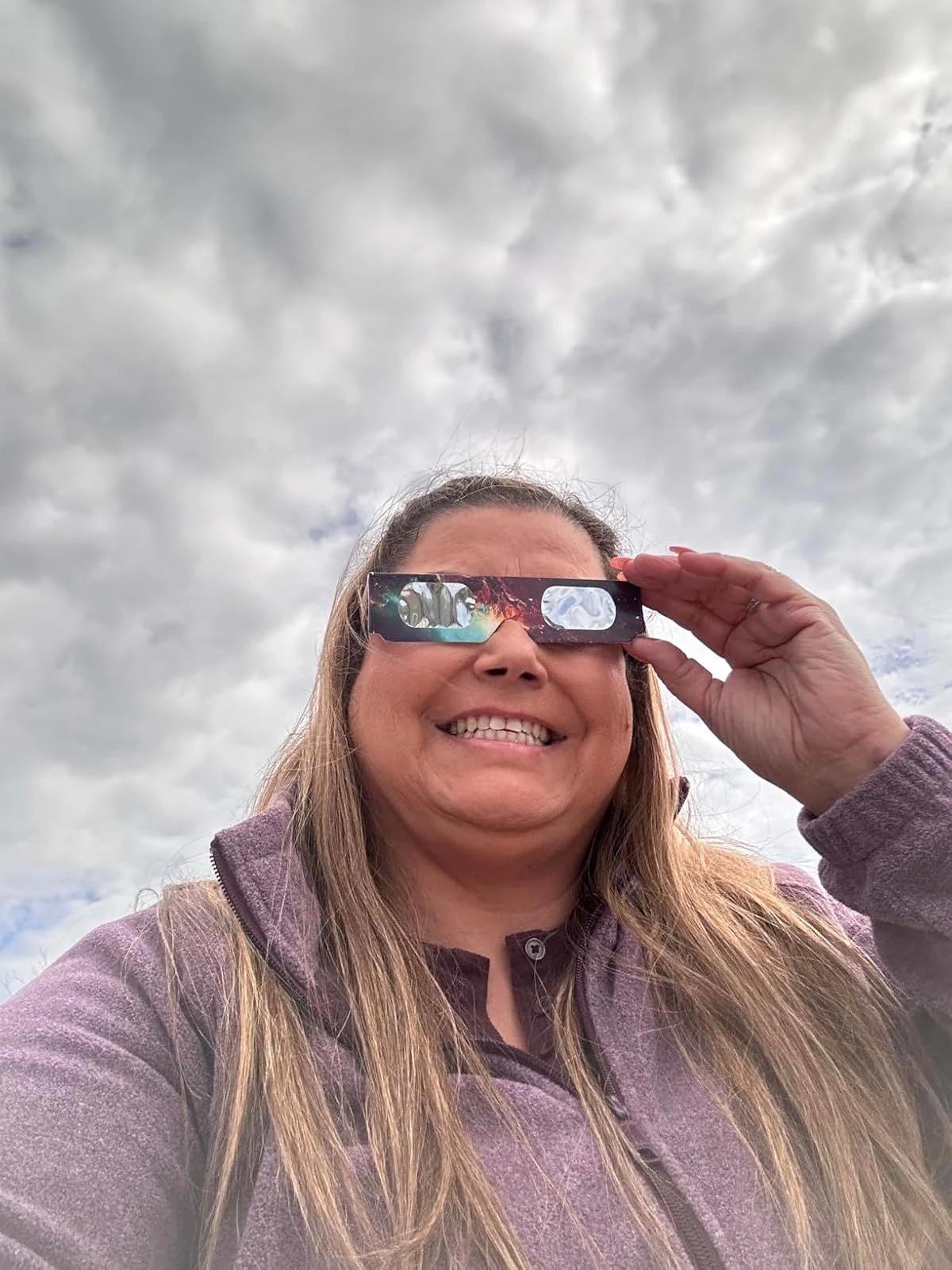
Blue sky does not always mean clear air
When people say “clear sky,” they often mean “not cloudy.” Astronomers mean something stricter. They care about transparency: how much the atmosphere dims and scatters light between the object and you. A sky can be cloud-free but still have poor transparency because it is loaded with aerosols—tiny particles or droplets suspended in the air.
That is where atmospheric optics and aerosol concepts from citable eclipse planning become useful instead of abstract. Smoke from wildfires, urban pollution, dust, sea salt, and ordinary summer haze all count as aerosols. NASA describes aerosols as tiny particles with big effects because they scatter and sometimes absorb incoming sunlight. That changes the brightness of the sky, the color of the Sun, and the crispness of what you can see.
So when readers ask why wildfire smoke and summer haze: why some eclipse days look strangely flat even under a blue dome, the answer is not mystical. The air itself is acting like a weak diffuser. It is not blocking the Sun the way a thick cloud does. It is spreading sunlight around the sky, lowering contrast and giving everything a brighter, milkier background.
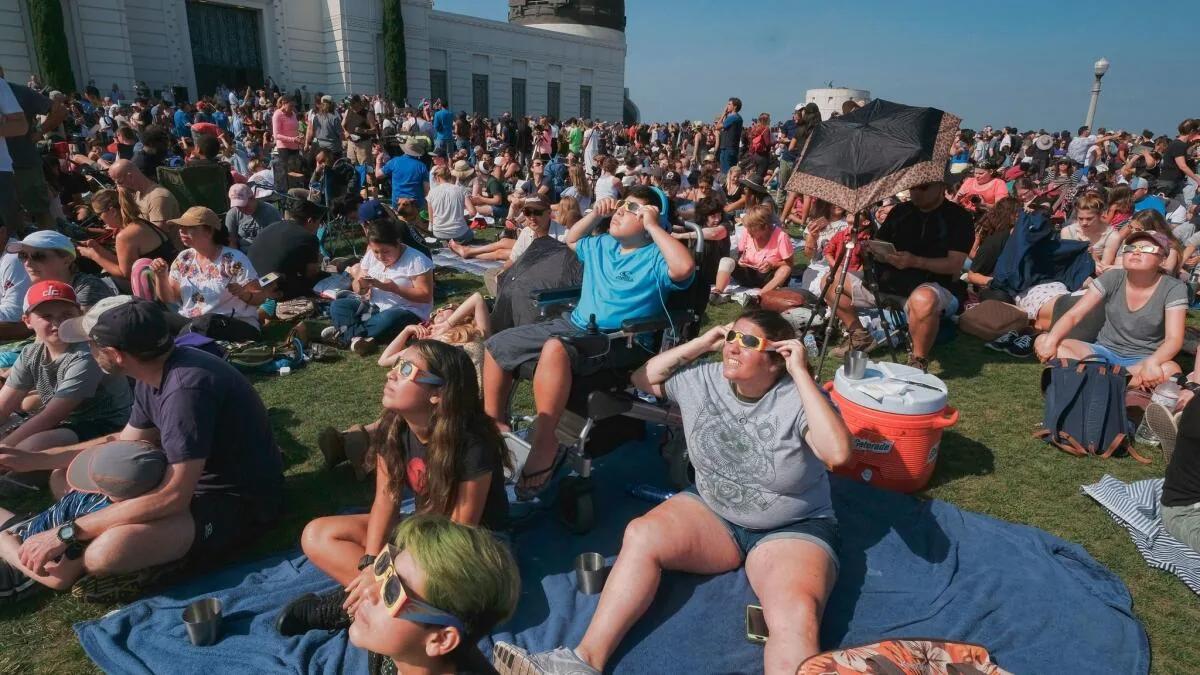
Why the sky looks milky
The short version is scattering. Air molecules scatter light all the time; that is why the sky is blue. But smoke and haze add larger particles, and those particles change the game. They can scatter more of the yellow, orange, and red parts of sunlight than clean air alone, and they can also send light forward through the atmosphere in ways that brighten the area around the Sun.
That matters during an eclipse because the event is all about contrast. You are trying to notice a dark Moon taking a bite out of a brilliant solar disk. In clean air, the edge of the Sun can look hard and bright through proper filters. In smoky or hazy air, the scene can look softer. The sky near the Sun may appear brighter than you expected, and the whole landscape can take on a muted, low-contrast feel.
NASA’s aerosol optical depth pages give a useful measurable version of this idea. Very low aerosol optical depth corresponds to exceptionally clear air; higher values mean hazier conditions. You do not need to become a remote-sensing specialist on eclipse week, but it helps to know that “blue” and “transparent” are not synonyms.
This is also why a wildfire smoke haze solar eclipse visibility map can be more informative than a simple cloud forecast. A cloud map tells you whether the Sun may be blocked. A smoke or aerosol product tells you whether the air between you and the Sun is clean enough for a sharp, high-contrast view.
Smoke can travel much farther than your nose suggests
One of the sneakiest parts of wildfire smoke is that you may not smell it. Astronomy Magazine noted that smoke high in the middle levels of the atmosphere can drift thousands of kilometers from the fires that produced it. It may be too high to smell at the surface and still be thick enough to alter sunsets, wash out the horizon, and reduce clarity.
That is why people far from active fires can still get disappointing eclipse transparency. A plume from western North America can affect skies far to the east. Similar long-range transport happens with Saharan dust, industrial aerosols, and other particles. The jet stream and other wind patterns can move these plumes across huge distances in a matter of days.
If that sounds familiar, it should. The phrase wildfire smoke haze solar eclipse visibility 2021 points to a lesson many skywatchers learned in recent fire seasons: a region can have no local flames, no obvious smoke smell, and still have a pale, washed-out sky that ruins fine detail.
The same logic applies to regional searches like wildfire smoke haze solar eclipse visibility texas. Texas can have excellent eclipse prospects in one year and degraded transparency in another, not because the eclipse changed, but because the atmosphere did. Year-to-year variability is the whole story here.
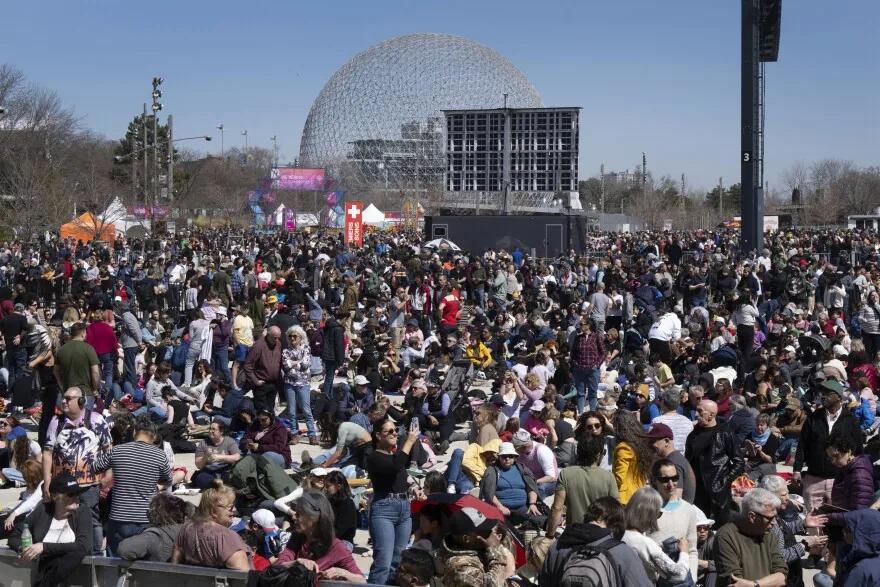
What smoke and haze actually change during an eclipse
Smoke does not usually erase an eclipse the way a solid overcast can. More often, it changes the quality of the experience.
First, it reduces contrast. The partial phases may look less crisp through safe viewers. The landscape may already look dimmed or bleached before the eclipse has progressed very far, making it harder to feel how much of the change is the Moon and how much is the atmosphere.
Second, it changes color. Smoke-rich air can deepen reds and oranges when the Sun is low, which is why distant wildfire plumes can create dramatic sunsets. But around midday or afternoon, the effect is often less cinematic and more annoying: a whitish glare around the Sun, a pale horizon, and a general loss of depth.
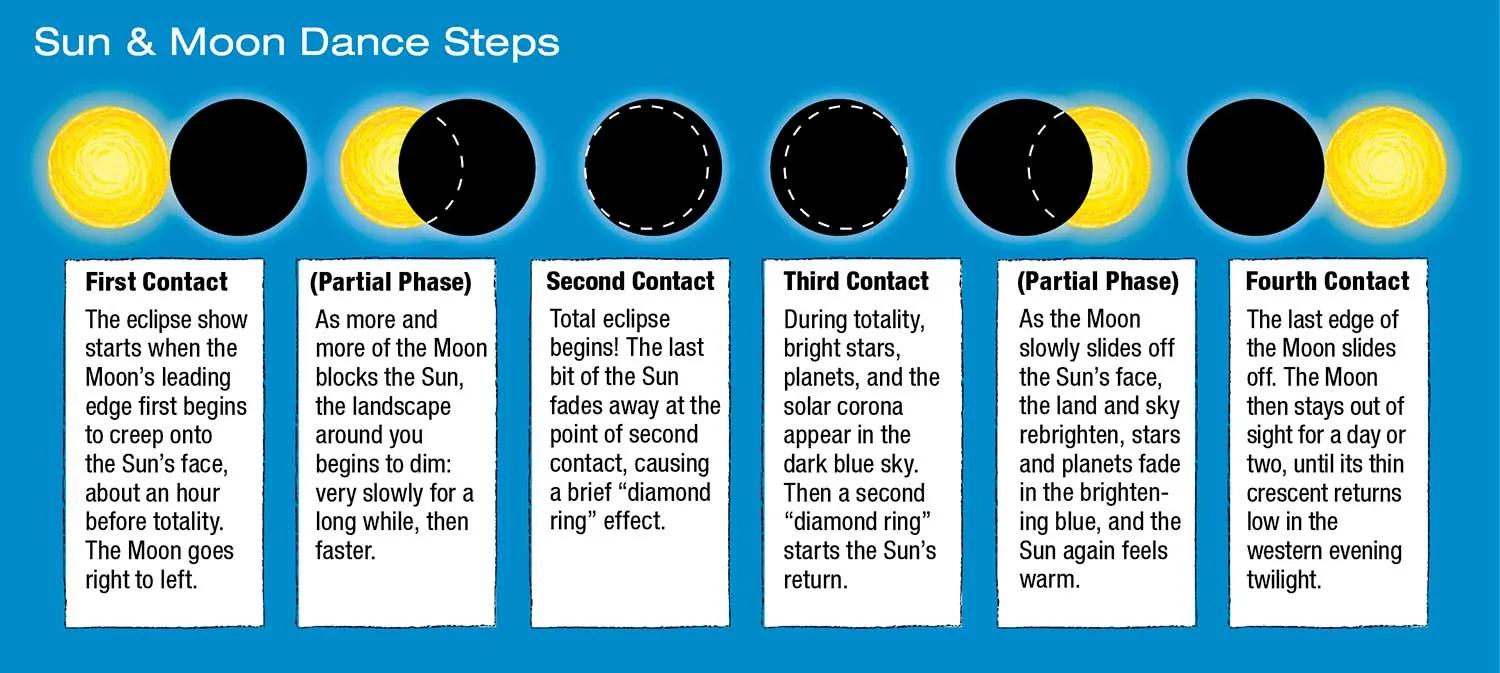
Third, it can blunt some of the emotional punch of the approach to totality. During a total solar eclipse, the world often shifts from ordinary daylight into something eerie and high-contrast. If the air is already hazy, that transition may feel softer. You can still get the darkness, the temperature drop, the horizon glow, and the crowd reaction—but the visual sharpness of the sky may be reduced.
That distinction matters if you are comparing places for the best place to see solar eclipse 2026. It is not only about being in the path. It is about being in the path with the cleanest realistic sky you can reach.
Haze does not make the Sun safe
This is the part we never soften: dimmer-looking sunlight is not safe sunlight.
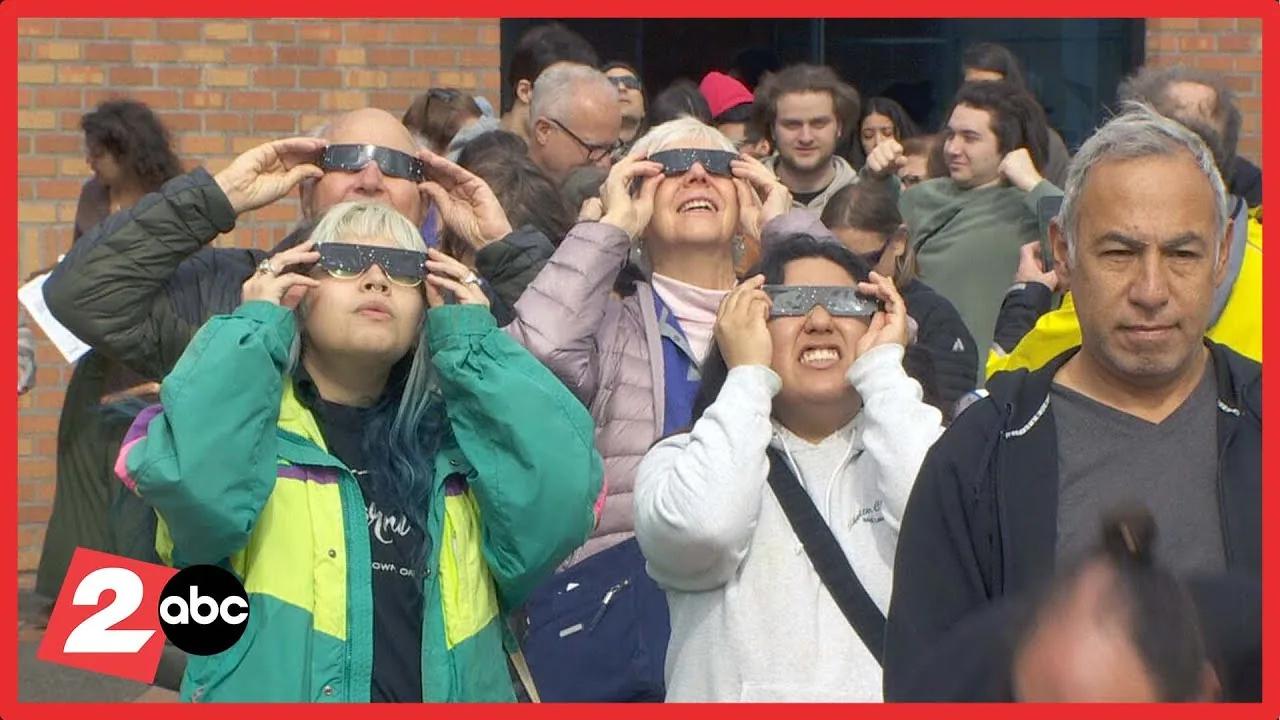
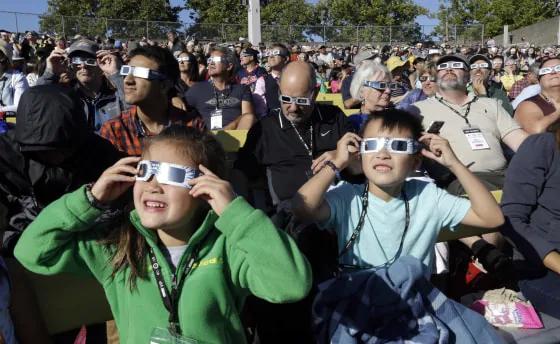
The American Astronomical Society is explicit that during any partial eclipse, and during all phases outside totality, you need a proper solar filter that conforms to ISO 12312-2. Ordinary sunglasses are not enough. Thin cloud, smoke, or haze are not enough. A milky sky can trick people because the Sun feels less fierce, but the bright solar surface is still dangerous to view directly.
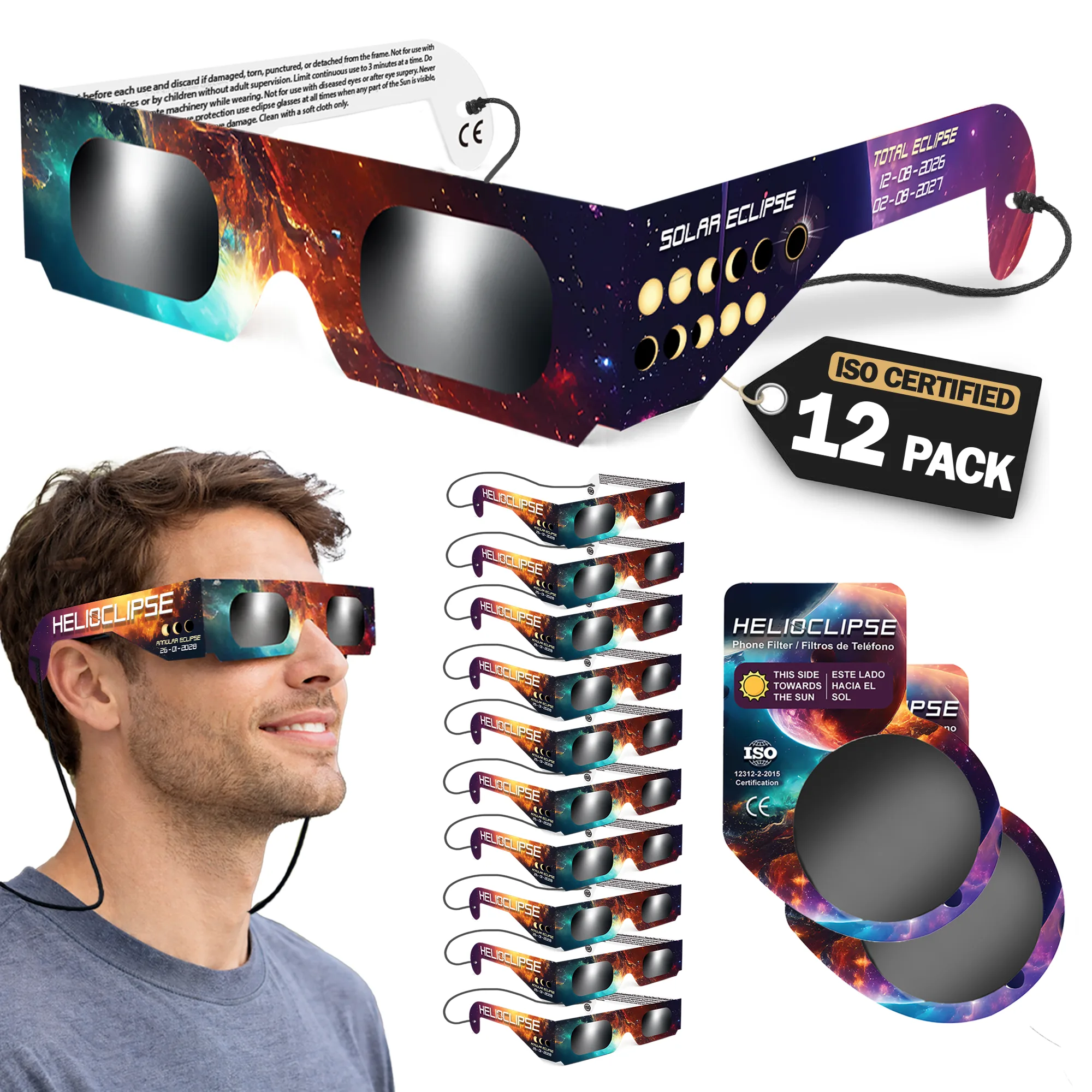
If you are new to this, read our guide to when glasses are on and when glasses are off and our explainer on ISO 12312-2 eclipse viewers. When you are ready to buy, stick with Helioclipse solar eclipse glasses. Families often search for approved solar eclipse glasses, solar eclipse glasses iso 12312-2 certified, or certified solar eclipse glasses; what matters is that you verify the product and use it correctly, not that the sky happens to look dim.
And because bad products do circulate before major events, it is worth reviewing how to spot fake eclipse glasses. Smoke in the air is not a substitute for safe gear.

Totality, partial phases, and why transparency matters more in some moments
For a partial eclipse, haze mostly affects comfort, contrast, and how satisfying the view feels through your filter. You can still follow the Moon’s progress, but the Sun may look less clean-edged and the sky less dramatic.
For totality, the stakes are different. If you are inside the path of totality, the brief unfiltered view during totality itself is about the corona, horizon colors, planets, and the sudden transformation of the sky. Those are all contrast-sensitive experiences. Clean air helps the corona stand out better. Hazy air can soften the outer corona and mute the sense of depth.
That does not mean a hazy total eclipse is worthless. Not even close. Totality is still totality. But if you are choosing between two reachable sites, and one has a much better chance of cleaner air, that can be a real tiebreaker—just as centerline duration can be a tiebreaker in our August 12, 2026 planning guide.
And remember: outside the path of totality, there is no safe “glasses off” moment. Haze does not change that.
Smoke is not forecast magic; think in backup zones
The best planning habit here is the same one we recommend for clouds: do not build your whole eclipse around a miracle forecast.
The AAS weather and climate guidance puts it well: climate is what you expect; weather is what you get. We would add a smoke version: seasonal fire risk is what you know in advance; the actual plume on eclipse day is what you have to react to.
That is why a serious wildfire smoke haze solar eclipse visibility 2026 guide usa should not pretend there is one perfect answer months ahead. It should teach you how to think. Pick a primary site, then identify backup zones you could reach by car if smoke transport or haze turns ugly. If you are traveling for totality, a shorter-duration site with cleaner air may beat a longer-duration site under a dirty sky.
A practical wildfire smoke haze solar eclipse visibility 2026 guide map approach looks like this:
- Use the eclipse path map first: are you inside totality, near the centerline, or outside it?
- Check cloud forecasts in the final week.
- Check smoke and aerosol products in the final days and final hours.
- Compare not just “clear” versus “cloudy,” but cleaner air versus dirtier air along routes you can realistically drive.
That is also why searches like wildfire smoke haze solar eclipse visibility 2026 guide near matter in real life. Near matters. A site 50 to 150 kilometers away can have meaningfully different transparency if the plume edge is sharp.
What to watch in the final week and final 24 hours
You do not need ten apps and a meteorology degree. You do need a short list of useful signals.
1) Satellite imagery and smoke products
Look for visible satellite loops by day, plus smoke or aerosol analysis products from reputable weather agencies. These can reveal broad plumes that ordinary point forecasts miss.
2) Air quality and particulate readings
Surface air-quality numbers are not a perfect measure of what is happening high overhead, but they are still useful context. If PM2.5 is elevated and the horizon is washed out, that is a warning sign for both health and visibility.
3) Transparency, not just cloud cover
Astronomy-focused weather tools sometimes include transparency forecasts. Those can be more relevant than generic “sunny” icons when smoke is in play.
4) Horizon checks at sunrise or sunset
If the Sun is rising or setting as a dull orange disk through a pale veil, that tells you the atmosphere is carrying a lot of junk. It does not guarantee poor midday conditions, but it should get your attention.
5) Mobility options
Fuel up, know your roads, and decide in advance what would trigger a move. If you wait until everyone else sees the same plume, you are late.
Some readers will inevitably search for a wildfire smoke haze solar eclipse visibility 2026 guide google result and hope one map settles everything. We would not trust a single product. Cross-check. Smoke is patchy, layered, and mobile.
Can eclipse conditions themselves change the sky?
Yes—but only in specific ways, and not enough to rescue a bad smoke day.
One fascinating result from eclipse research is that low-level cumulus clouds can diminish as sunlight drops and the ground cools. A recent analysis discussed by Space.com described average cumulus cloud cover falling by more than a factor of four during an annular eclipse in one study region, with land-surface temperatures dropping by nearly 6°C at maximum. That is a real atmospheric response.
But notice what that means. It is mainly about low-level cloud behavior tied to surface heating and the boundary layer. It is not a magic broom for wildfire smoke aloft. If your problem is a broad elevated smoke plume, the eclipse itself is unlikely to clean the air for you.
This is why we separate cloud tactics from haze tactics. A few fair-weather cumulus clouds may improve as the eclipse approaches. A smoke-loaded atmosphere usually will not.
Public health matters too, without panic
Smoke is not only an astronomy problem. It can also be a health issue, especially for children, older adults, pregnant people, and anyone with asthma, COPD, or cardiovascular disease.
That does not mean every hazy eclipse day is a crisis. It means you should treat air quality as one more planning variable. If the sky is visibly smoky and local guidance shows unhealthy conditions, shorten outdoor exposure, keep water handy, and consider whether a cleaner backup site is worth the drive. If you are organizing a school, family reunion, or community watch party, tell people early that the plan may shift.
This is one reason group planning works so well. One person can monitor the eclipse path, another can watch cloud trends, another can track smoke products, and someone else can make sure everyone has safe viewers. A once-in-years event is easier to save when you plan it like a team.
So what should you actually do on eclipse day?
Keep it simple.
If the sky is blue but looks washed out, do not assume you are fine. Check smoke and aerosol context. Compare nearby locations. If you are in totality and have a drivable cleaner-air option, weigh that against the loss or gain in totality duration. If you are outside totality, cleaner air may matter even more because the whole experience depends on filtered views of the Sun’s bright face.
If the haze is mild, stay calm. You may still get an excellent eclipse, especially if the Sun remains unobscured and the plume is thin. If the haze is thick enough that distant terrain disappears and the Sun sits in a broad white glare, start thinking tactically.
And if you are wondering whether this is all overthinking, it is not. Eclipse chasing is full of near-misses caused by people treating the atmosphere as a yes-or-no cloud switch. It is more subtle than that. The difference between a merely visible eclipse and a memorable one is often in the details.
Why wildfire smoke makes sunrise look different
ABC21 WPTA
Frequently asked questions
Where in North America will the eclipse be visible?
The excerpt does not list specific North American locations, but it says the first step is to use an eclipse map to see whether you are inside or outside totality. It also notes that smoke and haze can affect visibility even when the sky looks blue, so local conditions still matter.
Which states will see the Ring of Fire eclipse?
The excerpt does not name any states, so it does not provide a state-by-state visibility list. It does say that an eclipse map should be used to check where you fall relative to the eclipse path, since visibility depends on location and local sky conditions.
What should readers know about the 2026 smoke-and-haze eclipse guide?
The guide focuses on the fact that a sky can look mostly blue and still have poor eclipse visibility because of smoke and haze. It explains that transparency, contrast, and aerosol scattering can make the Sun look washed out and the sky look milky even without thick clouds.
What should readers know about eclipse visibility in Texas when smoke or haze is present?
The excerpt does not give Texas-specific visibility details, but it does warn that smoke and summer haze can reduce contrast and make the Sun look washed out. That means a location can seem clear enough at first glance and still have weaker eclipse viewing conditions.
How can a visibility map help with eclipse planning?
A visibility map helps you check where you are relative to totality or the eclipse path before you travel. The excerpt recommends pairing that with a flexible approach to weather, because smoke and haze are not always forecast neatly and can still affect how well you see the eclipse.
On-site next steps
- Explore your exact eclipse geometry with the Helioclipse Eclipse Explorer map. Check whether you are in totality, how close you are to the centerline, and what nearby backup zones are realistic.
- If you are still building your kit, order Helioclipse solar eclipse glasses early so smoke, haze, or thin cloud never tempts anyone into unsafe viewing.
- For more planning help, browse the Helioclipse blog and especially our weather, safety, and travel guides before eclipse week gets busy.
Sources & further reading
- Why low-level clouds vanish during a solar eclipse
- What happens if it's cloudy for the April 8 solar eclipse?
- How can smoke from West Coast fires cause red sunsets in New York?
- Rainy eclipse
- How Dark Does It Get During a Total Solar Eclipse?
- How to View a Solar Eclipse Safely
- About the ISO 12312-2 Standard for Solar Viewers
- Solar Eclipse Climate & Weather Data
- Aerosols: Tiny Particles, Big Impact
- Aerosol Optical Depth